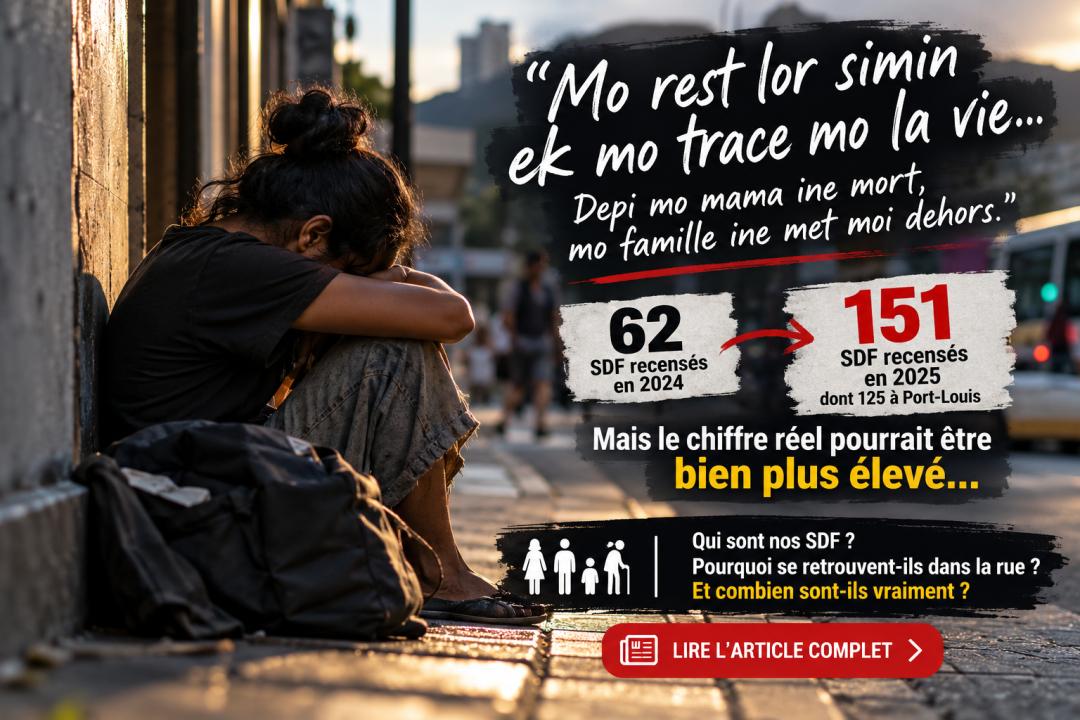
SDF à Maurice : « Mo rest lor simin ek mo trace mo...
07 October 2026
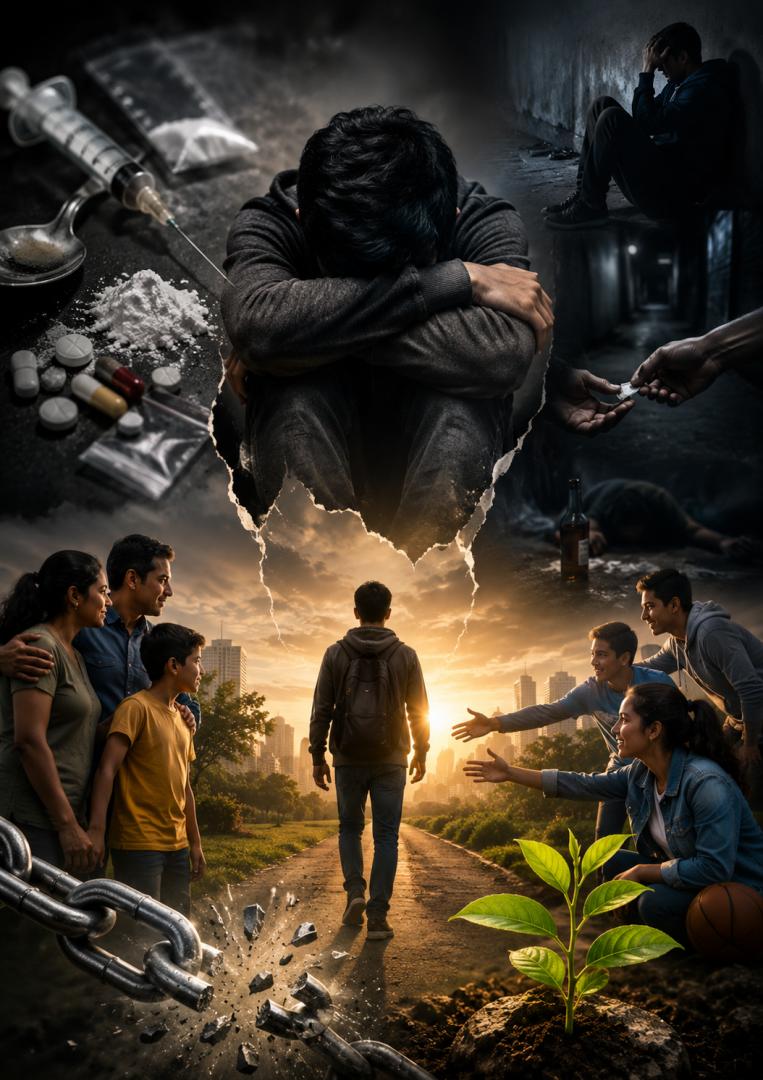
Every month, another family is left struggling with addiction.
Every year, more young people find themselves trapped in a cycle that destroys dreams, damages relationships, and steals futures.
Yet despite the growing concern, one question remains:
Are we truly concerned about the increasing number of drug abuse cases in Mauritius, or have we become so accustomed to the problem that it no longer shocks us?
Drug abuse is no longer a hidden issue affecting only a small segment of society. It has become one of the most pressing social challenges facing Mauritius today, touching every corner of our communities regardless of age, income, education, or social status.
Behind every drug user is a story.
A story of pain.
A story of vulnerability.
A story of missed opportunities.
A story that often begins long before the first substance is consumed.
The reality is that addiction rarely starts with drugs.
It often starts with loneliness.
With trauma.
With peer pressure.
With a lack of opportunities.
With mental health struggles.
With the search for belonging in a world that can sometimes feel increasingly disconnected.
Mauritius has witnessed the rise of synthetic drugs over the past decade, creating new challenges for families, schools, healthcare providers, law enforcement agencies, and communities.
What is perhaps most alarming is not simply the availability of drugs, but the growing number of young people being exposed to them.
For every person battling addiction, there is a family struggling silently.
For every family struggling, there is a community affected.
For every community affected, there is a nation paying the price.
Drug abuse does not only impact the individual user.
It contributes to family breakdown, school dropout, unemployment, mental health challenges, criminal activity, social exclusion, and increased pressure on healthcare and social support systems.
In other words, drug abuse is not merely a health issue.
It is a social issue.
An economic issue.
A community issue.
A national issue.
When discussing drug abuse, we often focus on arrests, seizures, and statistics.
But how do we measure the mother who cries herself to sleep worrying about her child?
How do we measure the dreams abandoned because addiction took hold?
How do we measure the potential lost when a young person who could have become a teacher, entrepreneur, engineer, artist, or leader instead becomes trapped in dependency?
The true cost of drug abuse cannot be measured solely in financial terms.
It is measured in broken relationships, lost opportunities, damaged mental health, and lives that never reach their full potential.
Law enforcement remains essential in combating drug trafficking and protecting communities.
However, experience from around the world has shown that enforcement alone cannot solve addiction.
We cannot arrest our way out of a social problem.
Prevention must become a national priority.
Young people need positive role models.
Families need support.
Schools need resources.
Communities need safe spaces.
People need hope.
Because when individuals feel connected, valued, supported, and empowered, they are far less likely to seek escape through harmful substances.
The fight against drug abuse cannot be left solely to the police, healthcare professionals, or rehabilitation centres.
Parents have a role.
Schools have a role.
NGOs have a role.
Businesses have a role.
Religious organisations have a role.
Community leaders have a role.
And every citizen has a role.
The question is not whether drug abuse affects us.
It already does.
The question is whether we are willing to work together to address the root causes before more lives are lost.
A nation's strength is not measured by the challenges it faces.
It is measured by how it responds to them.
Mauritius has overcome many obstacles throughout its history through resilience, solidarity, and collective action.
The challenge of drug abuse requires that same spirit today.
Because every young person protected from addiction is a future preserved.
Every family supported is a community strengthened.
And every life saved is proof that change is possible.
The fight against drugs is not simply about removing substances from our streets.
It is about restoring hope, rebuilding lives, and ensuring that every Mauritian has the opportunity to thrive.
The time to act is now.
Before another statistic becomes another life lost.