SDF à Maurice : « Mo rest lor simin ek mo trace mo...
07 October 2026
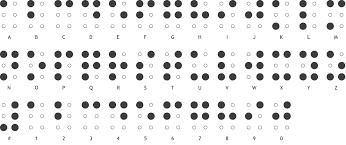
Do you think people can communicate using a Braille machine?
For many, the idea of language involves sight or sound — but for those with visual impairments, Braille offers a different, yet powerful, way to communicate. Braille enables reading, writing, and full participation in everyday life for persons who are blind or have low vision.
Braille is a tactile writing and reading system composed of raised dots arranged in patterns to represent letters, numbers, punctuation, and other symbols. This system allows individuals to access written content using their fingertips.
With Braille, people can:
Read books and educational materials
Navigate public spaces
Access product information
Use digital devices with Braille displays
Communicate independently
Braille is not just a communication tool — it is a means to knowledge, autonomy, and dignity.
While spoken languages vary widely across cultures, Braille is considered universal in structure. The basic arrangement of dots remains consistent across countries, even as it adapts to the nuances of different languages. Today, Braille exists for many languages including English, French, Arabic, Chinese, Spanish, and more, making it a truly global system of literacy.
This universality positions Braille as a bridge of accessibility and inclusion across diverse societies.
In Mauritius, one organisation has been central to the empowerment and education of people living with visual impairments: Lizie dan La Main – Union des Aveugles de l’Île Maurice. Founded in 1981, the NGO has played a vital role in supporting children and adults through specialised education, Braille instruction, orientation training, and community inclusion programs.
Today, we express our deep respect and gratitude to Lizie dan La Main for its continued dedication to the visually impaired community. We also pay a special tribute to the late Director and founder, Mr. Reynolds Permal, whose lifelong commitment and service transformed the lives of many. Mr. Permal’s leadership, passion, and compassion helped shape an organisation that stands as a beacon of support and empowerment. His legacy will continue to inspire future generations.
Braille is more than a system of raised dots — it represents equality of opportunity. When individuals have access to information, education, and communication, they are better positioned to participate fully in society.
Accessibility is not a luxury — it is a right. And systems like Braille remind us that inclusion begins with awareness and action.
Braille is a universal language of empowerment. It offers access to knowledge, nurtures independence, and ensures the dignity of all learners. As communities around the world work toward greater inclusion, recognising and supporting accessible tools like Braille is essential.
In acknowledging the contributions of organisations such as Lizie dan La Main — and honouring leaders like Mr. Reynolds Permal — we celebrate the progress made and recommit to a future where every person, regardless of ability, has the opportunity to thrive.