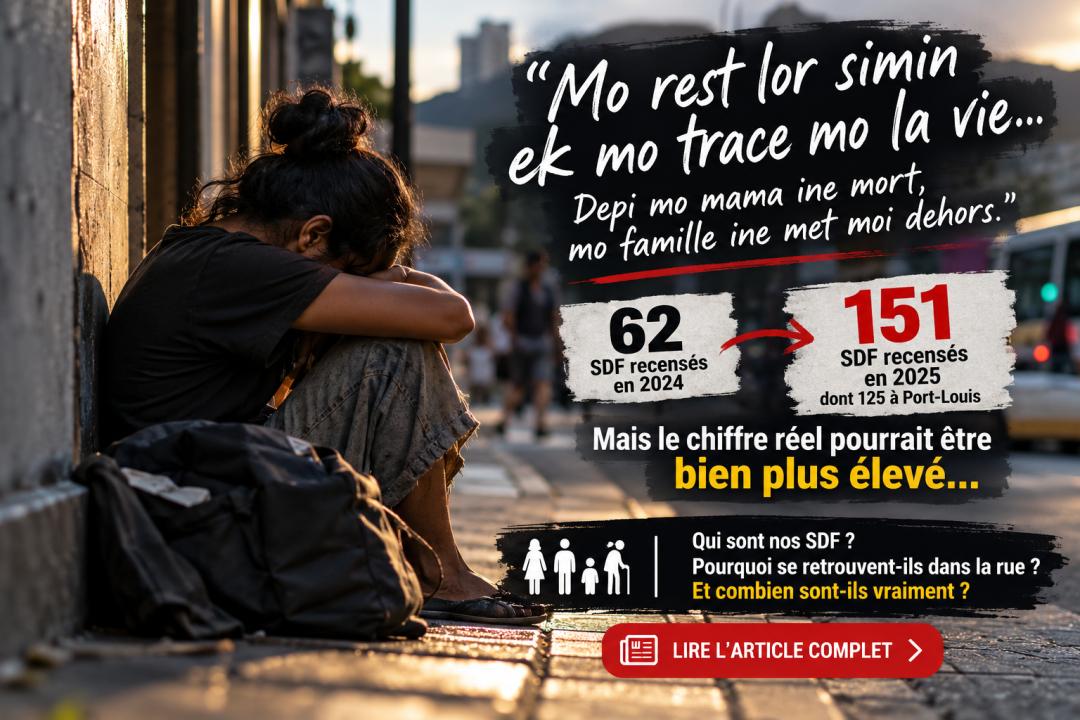
SDF à Maurice : « Mo rest lor simin ek mo trace mo...
07 October 2026
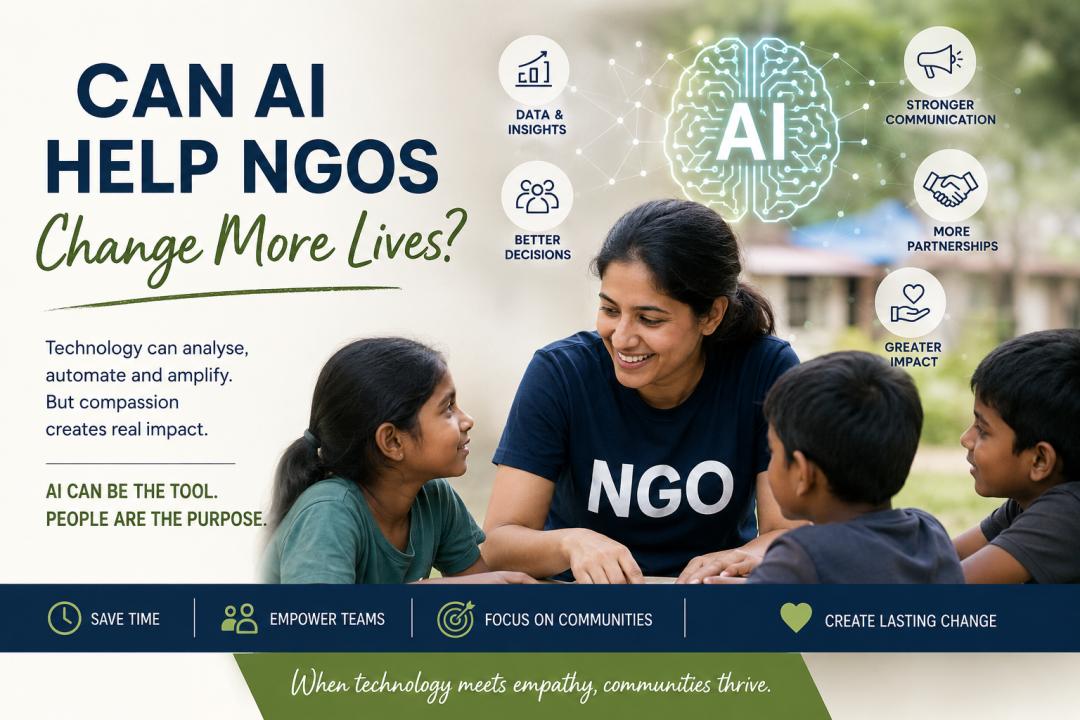
*Technology is transforming the way organisations work—but the real opportunity may be using artificial intelligence to give people more time to create human impact.*
There is a question I have been thinking about increasingly: Can Artificial Intelligence help NGOs create greater impact?
It is a question worth asking at a time when NGOs are facing increasingly complex social challenges, growing expectations and, in many cases, limited financial and human resources.
Across communities, NGOs are working to support children, empower persons with disabilities, assist vulnerable families, protect the environment, promote education and respond to social needs.
Yet behind many of these initiatives are small teams trying to accomplish an enormous amount of work.
Project proposals need to be written. Funding opportunities need to be identified. Reports need to be prepared. Donors need to be updated. Volunteers need to be coordinated. Social media needs to be managed. Data needs to be collected and analysed.
And somewhere in between all of this administration is the reason NGOs exist in the first place:
**people.**
### What if technology could give NGOs more time for people?
This is where AI becomes interesting. Artificial intelligence can assist with tasks such as research, drafting documents, analysing information, translating content, preparing communication materials and organising data. For an NGO, the greatest beneft may not be that a report takes less time to prepare. It may be what happens wit
Artificial intelligence can assist with tasks such as research, drafting documents, analysing information, translating content, preparing communication materials and organising data.
For an NGO, the greatest benefit may not be that a report takes less time to prepare.
It may be what happens with the time that has been saved.
A project officer could spend more time in the community.A programme manager could spend more time listening to beneficiaries.A fundraising team could spend more time developing partnerships.
A communications officer could spend more time telling authentic stories.
In other words, AI could potentially help NGOs spend **less time on repetitive work and more time creating impact.**
Moving beyond numbers
NGOs are often required to demonstrate their achievements through numbers.How many people were reached?
How many workshops were conductedHow many families received assistance?How many trees were planted?
These figures are important, but they do not always tell us whether meaningful change has taken place.
The more important question is:*What changed because of the intervention?**
Technology can help NGOs collect and analyse information more effectively. AI could potentially help identify patterns in surveys, beneficiary feedback and programme data, allowing organisations to better understand what is working and where improvements are needed.Planting 1,000 trees is an activity.Understanding how many survived, how communities participated in maintaining them and what long-term environmental benefits resulted is closer to understanding impact.The future of social development may therefore require NGOs to move from simply **counting activities to understanding outcomes.**
Giving smaller NGOs a bigger voice :
There is another opportunity that should not be underestimated: communication.Many smaller NGOs are doing extraordinary work with very limited resources.They may not have a communications department.They may not have a professional marketing team.They may not have the resources to produce sophisticated campaigns.AI could help change this.
With the right human direction, AI-supported tools can assist organisations in developing awareness campaigns, preparing newsletters, translating materials, improving presentations and communicating their work to wider audiences.This matters because an organisation can be creating significant impact while remaining largely invisible.
Sometimes the problem is not a lack of impact. It is a lack of visibility.**And visibility can create opportunities—for funding, partnerships, volunteers and collaboration.
Could AI change fundraising too?
Funding remains a major challenge for many NGOs.A strong project idea still needs resources behind it.AI could assist organisations in researching potential funding opportunities, understanding donor priorities, structuring project concepts and preparing initial proposal drafts.For small NGOs, this could be particularly valuable.It does not eliminate the need for expertise, relationships or a strong project.Instead, it could give smaller teams additional capacity to compete for opportunities that might otherwise require considerably more time and resources.
From corporate donations to corporate participation
AI could also support a different approach to corporate social responsibility.Businesses increasingly want their employees to participate in meaningful initiatives—not simply write a cheque.An NGO could potentially use technology to help design community activities around the skills, interests and resources of a corporate team.Perhaps employees spend a day supporting a community garden.Perhaps they participate in an environmental clean-up. Perhaps they mentor young people.Perhaps they use their professional skills to help an NGO improve its operations.This creates something more meaningful than a transaction.It creates **participation, connection and shared responsibility.
But there is a line we should never cross.For all its potential, AI also brings serious responsibilities.NGOs often work with people who are vulnerable.Their information, stories, photographs and personal experiences must be treated with dignity and care.Questions around privacy, consent, data protection, bias and misinformation cannot be ignored.And there is something else that technology cannot replace.
**Human connection.**
An algorithm cannot replace the trust developed between a community worker and a beneficiary.AI cannot replace empathy.
It cannot replace the reassurance offered to a frightened child.It cannot replace the dignity of being listened to.Technology should therefore remain a **tool in the hands of people—not a substitute for people.**
The future could be human + AI
Perhaps the conversation should not be about whether AI will replace NGO workers.Perhaps we should ask:What could NGO workers achieve if they had AI supporting them?**
A small organisation could potentially have access to research and analytical capabilities that once required a larger team.A fundraiser could spend less time searching and more time building relationships.
A project officer could spend less time on administration and more time with communities.A communications officer could reach audiences across languages and platforms.A programme manager could make decisions based on better information.This is where the real promise of AI lies.Not in making NGOs less human.But in potentially making them **more capable of being human.**
Technology with a purpose
The NGO sector should not embrace AI simply because it is the latest technological development.The question should always be:Does this make our work better for the people we serve?If the answer is yes, then AI deserves serious consideration.If it saves time, improves decision-making, strengthens communication, increases transparency, expands access to resources or helps organisations understand their impact, then it can become a powerful tool for social change.But the purpose must remain clear.
Technology is not the impact. People are. AI can help us work faster.It can help us analyse better.It can help us communicate further.It can help us reach more people.But ultimately, it is people who decide where those capabilities should take us.And perhaps this is the opportunity before the NGO sector today: not to choose between **technology and humanity**, but to bring them together.To use the intelligence of machines while preserving the compassion of people.To use technology to amplify voices, not replace them.And ultimately, to ensure that every innovation brings us closer to the communities we are trying to serve.
### **An open question**
As AI becomes increasingly accessible, the NGO sector will inevitably have to decide how—and where—it belongs in our work.
So I leave this as an open question to NGO leaders, social entrepreneurs, funders, volunteers and community organisations:
**If AI could give your organisation more time, greater reach, better information and stronger capacity—what would you do with that extra potential?**
And perhaps the bigger question is:
**How can we embrace the power of AI while ensuring that we never lose the human heart of social impact?**